Dolch Sight Words for Children
Dolch Sight Words for Children are high-frequency English words young readers should recognise quickly. Words such as “the,” “you,” “said,” and “because” appear often, but can resist basic phonics. Phonics helps children decode unfamiliar words; sight-word practice builds instant recognition. Teach a small group through speech, books, and short games instead of drilling a long list.
📥 Dolch Sight Words Practice Pack
Printable word groups, quick practice prompts, and a one-week tracker for building automatic reading confidence.
Leave your email — we'll send the PDF to your inbox.No spam — the PDF plus one short reminder. Unsubscribe anytime.
What Families Need to Know
The original Dolch resource groups service words under school labels from pre-primer to third grade, plus a separate noun list. These labels are not fixed age targets for English learners or children in other school systems.
Dolch Sight Words for Children belong alongside phonics. Words such as “said,” “one,” and “was” contain patterns requiring direct teaching. A child should learn the meaning, hear the word in a sentence, study its sounds and spelling, then find it in real text.
Why Common Words Can Feel Hard
Short words are not always easy. “The” has three letters, yet its vowel may surprise a beginner. “Could,” “would,” and “should” share a pattern but start with different sounds.
Multilingual children may need to connect printed English with a familiar concept. A child might recognise “under” in a game but not on a page, or read “where” yet confuse it with “were.” Spoken vocabulary, decoding, spelling, and rapid recognition develop at different rates.
Long drills turn reading into a memory test. Use brief repetitions: read the word, say a sentence, build another sentence, then find it in a book.
How to Begin at Home
When using Dolch Sight Words for Children at home, begin with five to eight words from current books or lesson tasks. “I,” “you,” “see,” “my,” “like,” “go,” “come,” and “the” suit young beginners. An older beginner may need “because,” “before,” “around,” “together,” or “always.”
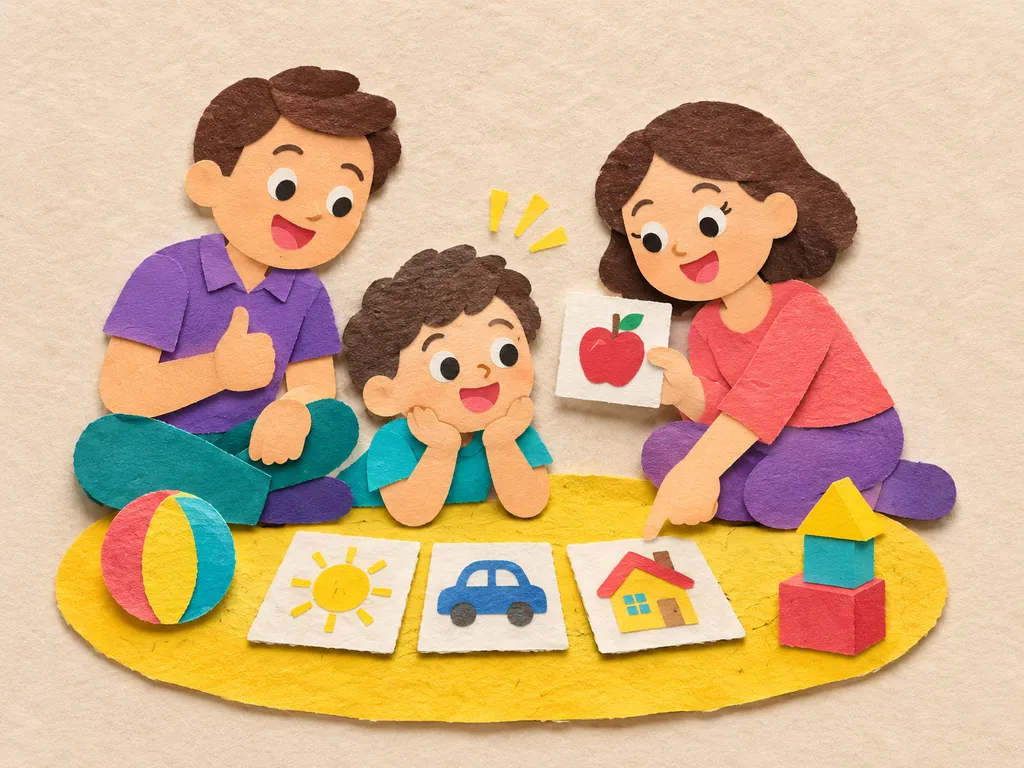
Show one word, say it naturally, and use it in a sentence: “I see the dog.” Ask your child to read the sentence, cover the target word, and supply it. Uncover the word and inspect its spelling. The exercise connects meaning, speech, and print.
The dog can run.
Can you help?
She said hello.
I smiled because we won.
Where is my bag?
We could read together.
Wash before lunch.
I always pack my book.
Try “keep or change.” Write “I can jump,” then replace one word: “I can swim,” “I can read,” and “I can help.” Repeated words stay visible inside changing messages. Sentence work supports the broader process of learning how to teach a child to read.
Examples for Different Reading Stages
Reading experience matters more than age. A seven-year-old new to English may need a smaller set than a five-year-old who has read English books for two years. These examples are starting points, not official Dolch age bands or deadlines.
Use Dolch Sight Words for Children as a menu, not a race. Move forward when your child reads and understands a word in different sentences. Keep uncertain words in practice. Remove secure words from daily drills but find them in books.
Older beginners need age-respectful materials despite an early reading level. Use football results, animal facts, game instructions, recipes, or science texts that match the child’s interests. Accessible wording can cover mature subjects.
Practical Activities That Build Recall
A word hunt gives rereading a purpose. Choose three target words and a familiar book, food label, timetable, or safe webpage. Ask the child to read each word’s full phrase. Finding “where” tests recall; reading “Where is my bag?” tests context.
Word sorting develops comparison. Group words by first letter, vowel sound, meaning, or spelling pattern. Place “could,” “would,” and “should” together, then contrast them with “cold.” Ask what stayed and what changed.
Five-minute Sentence Switch
Write “We can play.” Replace one word at a time: “We can help,” “They can play,” and “They can help.” Read each sentence aloud, then circle the word retained in every version.
Stop before accuracy drops. Practise two known words, two developing words, and one new word. Revisit them on several days through reading, card arranging, spelling from memory, and spoken sentences.
Common Mistakes and How Lessons Can Help
Do not ask children to memorise every word as a picture; this hides sound-spelling links. In “and,” each sound matches a letter. In a less regular word, identify predictable parts and mark the unexpected part.
Do not measure progress only by speed. Speed matters after accuracy and meaning are secure; racing encourages first-letter guesses. If a child reads “where” as “were,” compare both spellings, use each in a sentence, then reread the original line.
In one-to-one online lessons, Dolch Sight Words for Children can come from the child’s current books and tasks. Our tutors model pronunciation, check whether the child decodes or guesses, and adjust the pace. LearnLink lessons use high-frequency words for reading and communication, not isolated recitation.
- Choose five Dolch Sight Words for Children aged five to seven today.
- Practice each word aloud three times before reading a familiar picture book.
- Use flashcards for five minutes, mixing mastered words with two challenging words.
- Correct guessing gently by pointing to letters and rereading the complete sentence.
- Track progress weekly and ask the teacher for support after two difficult weeks.
When a word has several meanings or pronunciations, Cambridge Dictionary is a useful check before turning it into child-friendly examples.
Frequently Asked Questions
Should My Child Memorise the Whole Dolch List?
No. Introduce Dolch Sight Words for Children in small groups drawn from current books and sentences. Keep phonics in the routine, teach unusual spelling directly, and review across several days. Recognition in meaningful text matters more than ordered recitation.
How Many Words Should We Practise at One Time?
Five to eight words is a manageable starting group, depending on attention, reading experience, and English familiarity. Reduce the set if your child guesses. Add words when the current set can be read in different sentences without prompts.
What If My Child Can Read a Word but Cannot Spell It?
Reading and spelling may progress at different rates. Ask your child to say the word slowly, identify its sounds, write predictable letters, and study the unexpected part. Short sentence dictation connects spelling with meaning.
Are Dolch Words Useful for Older English Beginners?
Yes. These words appear throughout everyday English texts. Use age-appropriate messages, instructions, facts, and short articles instead of early-years picture books. Choose words by reading need, not the original school label.
Put the method into practice:
- Start with five to eight useful words from a current book.
- Read each word inside a complete sentence.
- Practice through sorting, sentence changes, and short dictation.
- Review uncertain words across several days before adding more.
A short one-to-one lesson can show what level and pace fit your child — book a trial English lesson.
Stay updated on our latest tips and resources by following us on Instagram LearnLink.